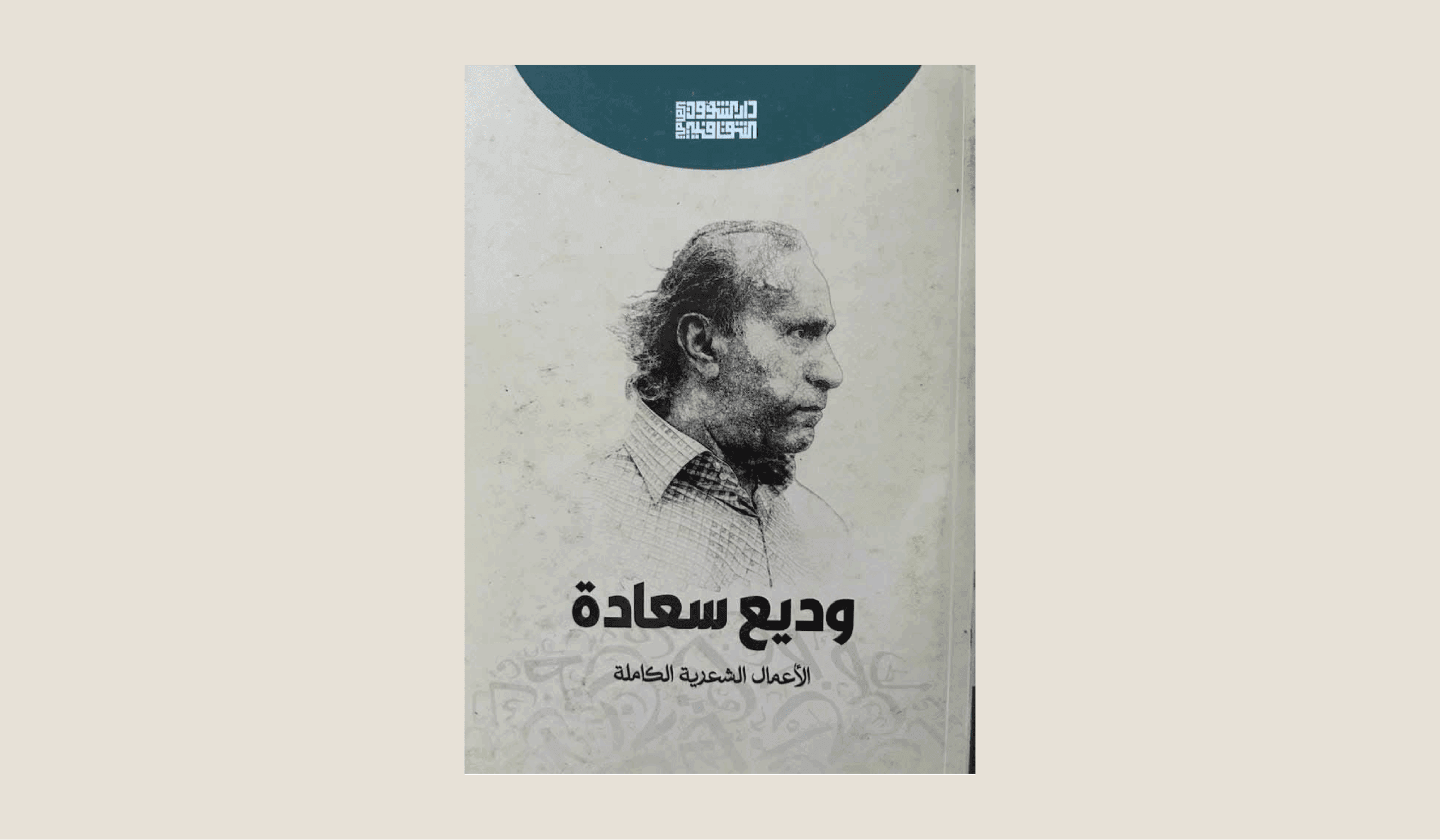

Muhammad Mahrah
A poet and a Sudanese writer.
My relationship with a happy friend is not a poet's relationship, nor a poet’s relationship with a poet; it is at its heart a relationship between an orphan. Farbathis with his hair is irrelevant to his role and value in the dispersion of the modern hair text and his escape from his traditional orbits, but because this poet is exactly back to him whenever I remember my father's body lying down a wooden table. «Smile regret.» Which makes it «A beautiful poem that forgets us or makes us forgive an ancient hate.»And between the brackets,Gaston Bashler.
All the hair I read after that was to absorb that scene, and to understand what happened to me at that confusing and complex moment, poetry wasn't impossible after my father was gone, it was more possible than ever, especially if it was a poet like a happy morning, from which I learned at my poetic beginnings how to turn the sorrow in the toilet hand into words, and I promise my youth to attend my father.
I write about a delightfulness to celebrate the warmth of loss and the warmth of the thin soup, with the hair that inspires in the original sense abhorrent pyramids of fermental imagination:
«I'm going to the woods with the robbers.
And with their surprise.
Cut my dreams and throw them in the fire.
The robbers say:
The Yabbs is cut.»I'm sorry.
My friend asked me more than ten years ago about the feasibility of poetry; then I was in a position to formulate a proper response, and I found that clavicle and flare would give up any answer that would dissipate his suspicion and doubt, so the hair would not go beyond being a childish adult on the chest of the language. «Lightning.»And...«dust.»And...«Water»And...«A passenger seat left the bus.»And...«Probably because of a cloud.»I'm sorry. I'll leave the answer to a happy deposit; it's a poet who doesn't know what to pretend and look, just writes a pure hair that he likes from an elusive imagination, a hair that takes on the severity of our experience in this world.
I realized that our poems were written to parents who didn't exist, parents who left behind, sons who grew up inside orphaned, lonely and insane:
«Why do I remember my father now?
I was a kid when I drove him to the grave.
But they were looking at me.
And it was nice to grow up in front of them.»I'm sorry.
Happiness begins in his hairy obsession with combustion and flammatory options, written with a glorious memory, founded in a tuna that invents ash alphabet and retrieves its experience at the entire cosmic barbecue party:
«When I last invited him.
That was on the beach.
Then it escalates from our house.
Smoke had burned meat.
And my father became a black skeleton.
I got up and took one last look at his coal.
I went pregnant alone.»I'm sorry.
A fragile organism that rejects the hair, which is proposed to be heroic and inflammatory, rejects a mission that borrows its faint presence in a text full of rubble; the text that does not reflect the inflammation of the soul, the inflammation of the body, turns the poem into arrogant shrine to save the crease of the hair itself, must give rise to a dynamism.
«Now I admit I invented many lies of words.
What I said and what I wrote was nothing but a lie.
Son of a bastard for a crazy imagination.
What I said and wrote was a betrayal of words.
That's what I demand for innocence.
And I'm doing the bitch with her.
I shattered the clouds.
And I darkened bird feathers and saw wood.
I shattered the tree when I said it was looking.
And the mountains if you wear them feet.
When I brought their bones back to life,
And life when I brought her back to the dead.»I'm sorry.
His scripts crave the imagination and dive deep in the feeling:
«We climb our laughs.
Because we scream so hard.»I'm sorry.
It is true poetry that leads you with determination to no-face and no-name, which exposes you from a strawberry-shaped robe, to rise naked without features:
«I got the last point.
Am I the one looking for a melt or am I?
Or am I, too much to look for his melting, I've gone like him.»I'm sorry.
The hair is a vision that ranges from childhood to death, given that poetry is only met by self-responsiveness. «Writing from scratch.»- What? By proposing the patent of the beginnings, not as some say in the minds of writing without prejudices and prejudices, a position of existence is not based on a vacuum, it raises an awareness of a comprehensive vision and a total sense of happiness, and death, as a inevitable and final fact, does not find the equilibrium of solutions, but a vibrant vocabulary with which it is open. «Missing text» Watch this existential obsession:
«I extend my hand signals to the voices that have gone far,
And bring her back to the throat.
Spray her a shirt under the wool of the Indians,
I sleep near her.
In this little place,
Where he plays soft and dead cards,
And they share roles.»I'm sorry.
The absence of a more happy hair than a picture; once he writes about the absence of the place:
«Says who stayed in the village.
That a strange dog came all night.
It's in front of their homes.»I'm sorry.
Another time comes as a lack of meaning:
«Whoever loves his kids doesn't give them his picture.
Don't give them the same.
Don't leave them a memory.
…
Who loves his children gives them forget.»I'm sorry.
Sadness in genuine good hair, and disappointment, is not anxious for everyone to convince the seriousness of their grief:
«I don't think the land is loaded except.
The density of the gods.
……
All this wind is nothing but
Horses.»I'm sorry.
Thank you very much, because with all that honesty, this wound, and this incendiary language that goes through the spirit, I have a certain plan for tonight, but to talk to a generous woman who gives the evening a night to hug the distant face of the moon and read your texts that give the evening brothers!