
Omar El Raji
A poet and an alien writer.
The question of modernity in the poetic text is no longer controversial, as it was in the past, since modernizing as a structural situation in the text is now beyond the shape to the deeper.
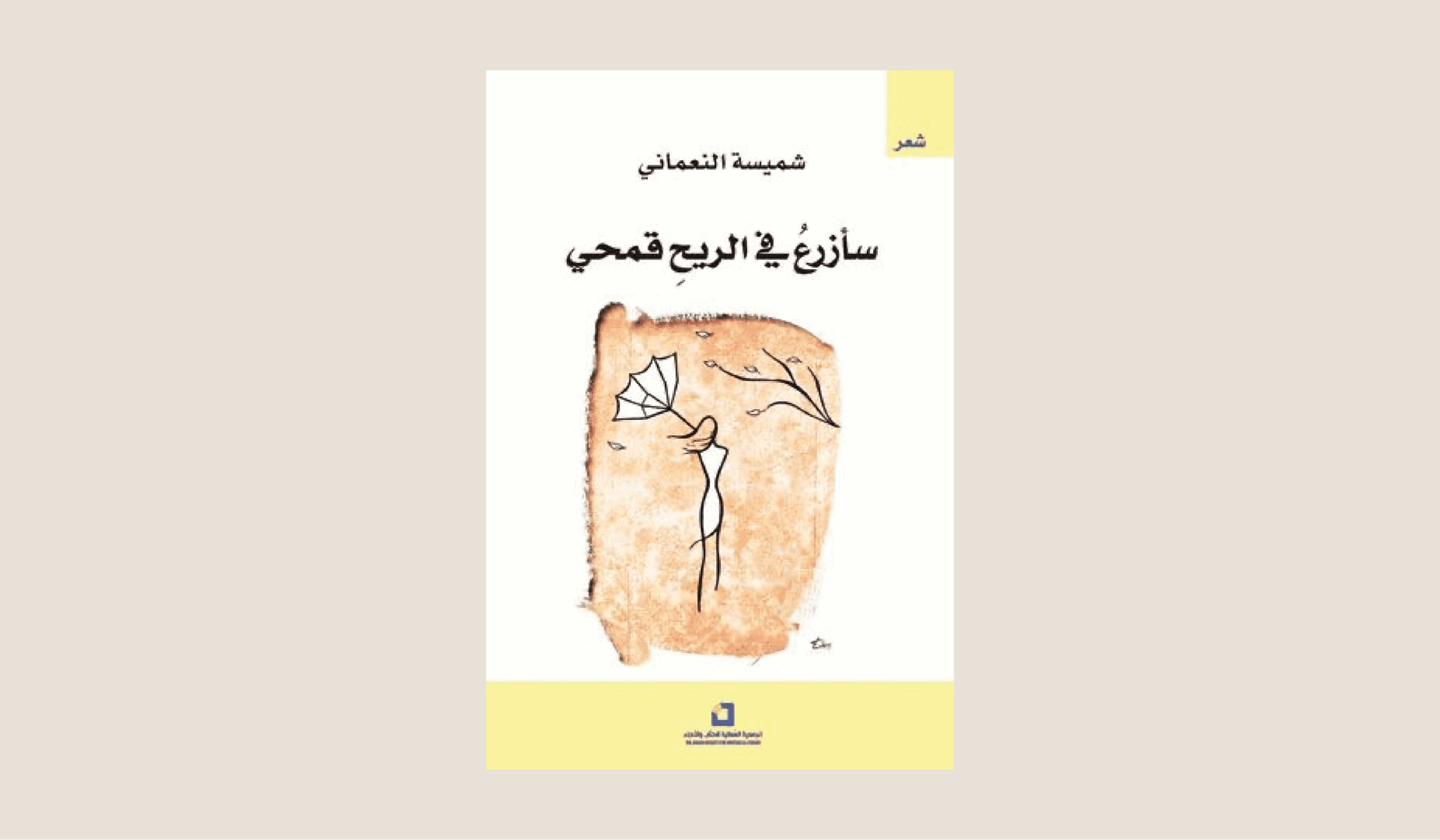
And as part of our reading of the Ammanian poet's religion, "I'll grow in the wind."which includes 20 hairdressers in which forms vary and which unite in one artistic value is the pursuit of conscious modernization.
"I'm gonna plant in the wind a lump of blind poetry, a shiny hair group that promises us with heavy rains of fresh poems and carries with it a world of intense awareness and questions, deep details of the coded poetry.
"I'm nobody." An inauguration of operational poetry makes us stand at the idea of the intentional denial of me/self, which is undoubtedly a fundamental topic of modern hair worldwide, that it is a passive exile of poetry and proof of its hair at the same time, and in the poem it is a kind of accountability of the world for its human self- position, which blurs and diminishes the cylinder of life and its coldness.
"I don't count,
I'm desperate for a root and a stretch.
I'm the sound of a wind blowing up the promise of death."
That's how it's denied the charge of being there, and that's the worm of poetry all the time, but then the link of the poetry to the state of exile and extermination to other elements represented by wind, despair and the tide and carrot movement seems to be an intentional symbolic reflection of another kind of existential formation represented by the poetry.
"I'm the tear of the grief that's shattered on the face of life coming from cheek to cheek
I'm the object that went out,
And no magic is returning the mortal in a dead body.
I'm an absent alphabet who fled to the homelands asking her the sorrow about the stretch."
In this intense poetry, a number of things can be referred to in the form of key observations that tilt the tide from what we have called from the beginning: in pursuit of a literary artifact, the first of them is the language in which the poet is wearing a symbolic rig and the reincarnation of its existential experience.
The idea of home is also part of the poetry ' s quest to modernize with an intellectual consciousness, with which poems become a bearer of meaning and of the ideology that instils the contemporary human being with his screams and anxiety about existence, life and living reality, one day and a moment of a moment, also in the direction of a philosophy in the hair that heated Eliot in Earth.
"My home, my bucket." A poem in the country that redefines the country beyond the limits of subordination and greater than the country ' s land meaning.
"My home who enlisted names and visions
It describes the light in the vest.
He distributes days at the top of the rivers.
My patriotic palms and her cousin's son.
The house of the poem and the stake.
And on his plans, the old stone valley set a light.
And people saw the night wax.
They celebrate the home to which the path was captured,
With the vision of the fire...
It's a real homeland that's high-minded symbol, and it's a densely populated home, and it's a imaginary, imaginary, imaginary, and imaginary-style-style-style-style-style character.
This modern poetry continues to pass in touch with other situations and unconscious areas of perception and triumph over its entireties, including the search for poetry in cosmic human values such as the value of love, which is not conceived as a crooked comic, but by the same poetry.
"I love you and the sea you
And you're the poem high in the talking.
I love you and magic.
And you're the boy in the arts of the place.
I love you how much the sea sounds, Spirit Day...
In the language of this section, this is a modern sleeve, which tends to link the value of love to other elements of hair, such as poems, speech and arts, and it is not about benths or hair that discusses poetry, to the extent that it is a deliberate choice of art that defines great human values with unique beauty elements.
'Cause you're a female.
"You pass a port opening...
A rhythm.
You're the water.
And you're the truth.
If it weren't for you, she wouldn't be in the wilderness.
What she had with the baggage.
What she showed up with farm songs.
"What's the silence of the belt and the rash."
There is no doubt that the issue of females is not at the threshold of creativity; it is a subject that finds its impact on intellectual and social research on a wide scale; what the poem here does is that it links female privacy with the great existential questions and the elements of beauty in nature, so that females can be made a condition of persistence, reassurance and reservoir in the universe; this vision is intersected with the notion of ceremonial ceremoniality and the mindset.
And what can be said in conclusion is that Diwan"I'll grow in the wind. It provides a picture of the new and serious poetry that triumphs for modernization and modern poem, especially that poem that creates its style and builds on cultural dimensions that are reinforced by vision and language.