
Ahmed Abu Diab
Egyptian writer
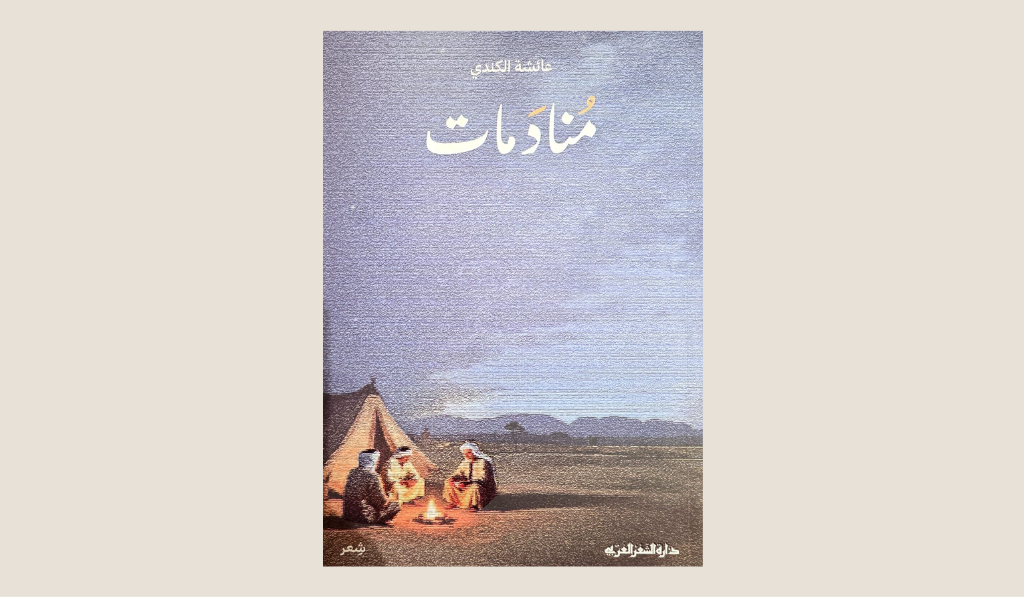
You make poetry. Canadian Aisha One of the high-profile young voices in the U.S. nasal hair, and one of the symbols of the poem that have been able to combine authenticity with contemporaryism, between self-examination and collective conscience, in a language of emotions, memory and whining. Manamat. It is this overwhelming presence of time as a memory, anxiety and a retrieval of the past, so that hair then becomes a way to preserve the moments of loss and reach, the details of life that are melted over time, and the self that you seek meaning in the passage of the past at present.
In the poems of religion, time is manifest not as a background to events, but as a hairy, vibrant and hungry, it does not deal with the past as an end-of-life, but as part of its internal entity, it restores time not to fill it, but rather to rebuild it in poetic images, combining the inspiration and absence of memory, the old places, the friends, and the warming.
Says a monster in a poem. His keys:
I love your dirt.
And wait for your return and open it.
Spring of the age.
Explain and give me buy it.
I had your doors slipped.
And penetrating missed his keys.
This is where the poet turns the emotional relationship into a symbol of the beautiful time that has passed, it doesn't just show the spear of love, it reflects the depth of belongings when you say, «I love your dust.»- What? Love turns into the extension of my soul to earth and memory. "Your rose and its opening." It's waiting for the inner spring, to go back to the first time of emotion, and when you say, «Was about me locking your doors, and the lock missed his keys.»She shows her consciousness of loss, like she's touching the impossibility of restoring the past.
The inspiration in the hair of the Canadian armament is an internal energy that moves the text, not only a whining to the lover or the homeland, but extends to the first self, to innocence, beginnings and simple days.
In some of its poems, we find a monster that speaks the past as if it is a close person; occasionally, she smiles at him and sometimes, but she does not renounce her emotional attachment to it, that association creates a unique hair situation, as the mourning turns into an instrument of expression of identity, and a means of preserving the diversity of customs, language and sentiment.
You say poetry in a poem. Rain and Riad.:
The time for me is my flood.
And, oh, crap.
His diet runs through me.
And he wants to go down.
The Canadian Beast highlights its deep philosophical vision of time, it doesn't look at it as a punishment for days, it's a volatile state of conscience. «It's time for me without it. It's gloomy.»- What? To point out that life without a time is dark, with it swings between hardship and satisfaction, and then comes through the sign. «His supply stream is multiplier and is dropping.» In order to make time a changing river, unpredictable, at a moment of tendering and in another receding through this water imaging, the poet reflects a profound human experience in the face of life fluctuation, where time becomes a partner in conscience, with a stretch and a carrot, joy and dissolved, but it remains the framework within which it is self-contained and secure.
The language of the Canadian Nabatian Worm enjoys its spontaneousness and honesty, but at the same time it has a strict technical awareness that makes it capable of transforming the accent into a high poetry language, using the unique heritage with caution and intelligence, preparing statues and folk symbols through religion to make it an intergenerational bridge, as if it is rebuilding past language in the present, so its poems are common ground.
In many of its texts, the same poet faces in the mirror of time, so the poem seems to be the scene of an internal dialogue between "I" and "I" present, which produces a deep awareness of loss, but at the same time it gives the poet the ability to reconcile with change, as if she realizes that the passage of time does not erase memories, but reshape them within the heart, from here comes a long life of calm that does not cause.
Canadian says in a poem.The pill.“:
I wish you couldn't get back.
I'd be near you near my neck for the neck.
And wish me the idea of your absence, I promise.
It was my intention of losing you and Sid.
Try to pull the saddle.
As a living, and you want to promise.
The poet is most oblivious and rejected to lose, expressing her inability to adapt to the distance by saying it. «I wish you couldn't get back.»- What? It's a wish in its envelope to protest against the cruelty of time, and then it connects proximity to sense and emotionalness when it says, «I wish you were near my neck for the neck.»- What? To make the love of the soul, and to meet a natural extension of her existence in the next few days, the voice of the inspiration grows until it turns into a transparent poetry. «It was my intention to lose you and Sid.»It makes the loss a metaphorous death, an alternate life, and the end of the video. «The clouds of grief are shattering. Cod lives the sun and the tide.» In the middle of the darkness, as if she sees crying as a rain that defuses memory and refreshs the sun, the poem becomes a prayer to restore a missing time, even in the dream.
It cannot be dissociated from the sense of national and human identity in the Canadian wax. When it speaks of a beautiful past or of homes that have left or from childhood, it actually paints a picture of the identity of its society in all its details: the sea, sand, social relations, old values, and voices that have been warmly filled.
In Aqfit, she says:
I stopped what I used to look at.
I touched our family.
For one of you, you always roll.
And the trouble you've got.
Get up to meet you and touch me.
And fathers in people and slopes.
She paints a wallpaper and a wallpaper of absence and impossible to go back to the past, where she says, «I didn't come back looking at me, and I touched our IVs.»It makes the loss a visual sight of the place without existence and warmth, here, the lover turns into a symbol of a long time gone, and the place to an empty memory with nothing but ransom, yet it remains in its conscience, remembering it with its hair to confirm that the past, despite its departure, still retains its moral character and human beauty. The cut end. «He's got to be on your feet, touches, stays in people and slopes.» Living in the dream and memory, awakening and touching on the loose end of the rendezvous, time becomes a closed circle of waiting and whining, not measured in days but in depth.
The poems of the Canadian Dream are not just a record of the past, but a celebration of it, a insistence that it stays alive in the eyes of the present, that it remain part of the blue hair profiles of the Emirates, whose poetic images are simplicity and humiliation, that they do not resort to ambiguity or complexity, but to the emotional truth that gives the image of its inner image, and use nature of its eternal glory, and eternal eternal eternity, and eternal glory symbols.
A monster that keeps the emotion, the warming of the accent and the honesty of the experiment, and this is a model for the nascent poet who has been able to express her own conscience in a language that preserves the spirit of the heritage and renews his presence in modern times, and perhaps that's what keeps her hair in, not just because it restores the past, but because it gives him a new life in the heart of the lung, and reminds him of the hair.