A rebellion.
An Iraqi poet and writer.
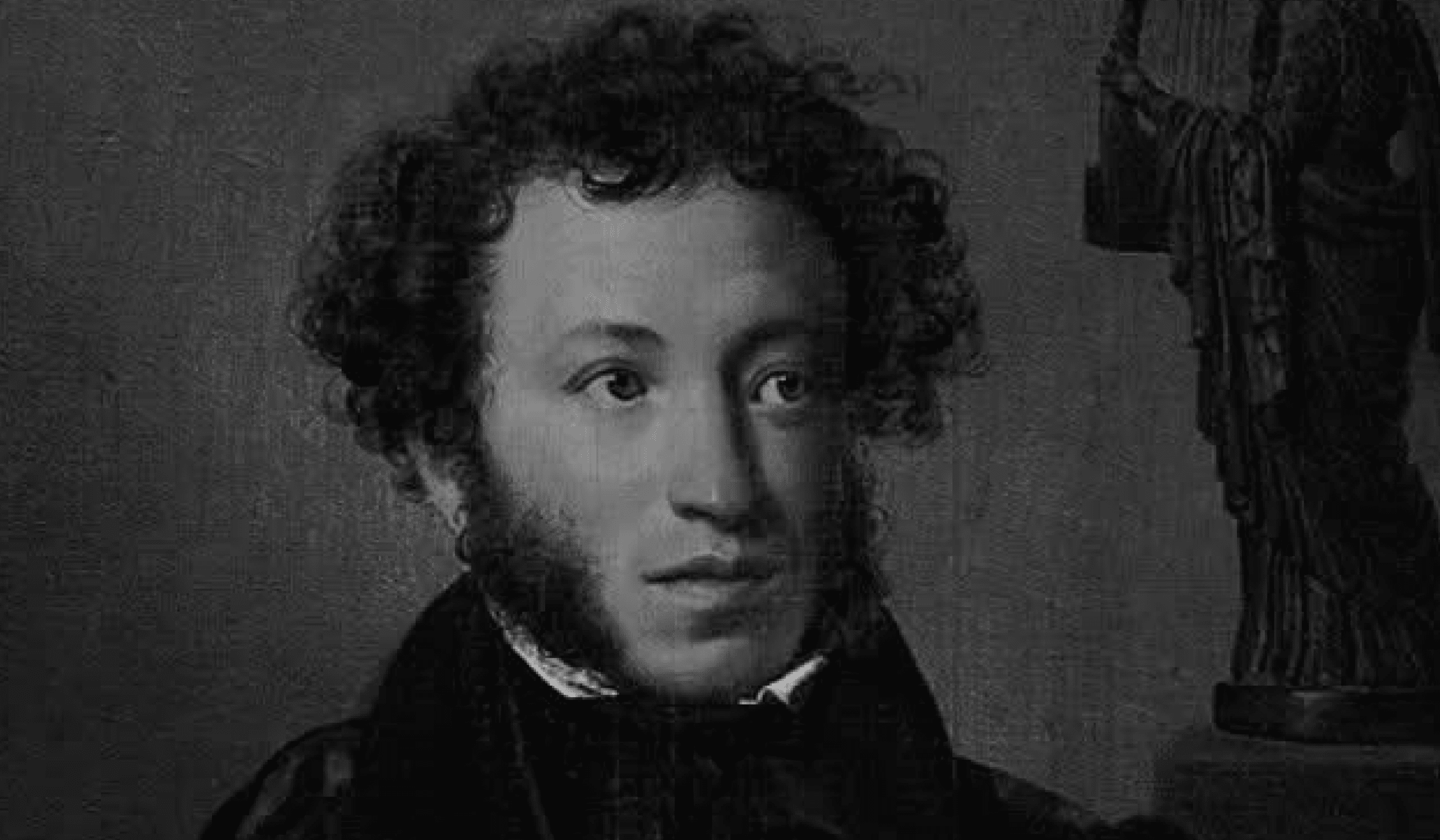
It wasn't a passing moment, no false cultural taste, no instant event, in his hair life, approaching the east, it was an internal coup and a profound revolution, reshaping his vision of poetry and correcting his vision towards the world. Since he set up a coercion in the city of Mikhailovskwe, Bushkin has flew from its balcony on another world, a world led by words, once he has not seen or found it in the west: wisdom, moral dimension, human voice, which transcends space.
In those years that our friend lived in the city of Mikhailovskwe, captured on it, read the Quran and Persian poetry, which later enabled him to reconsider the meaning and role of the poet, from his spiritual life to a new, adventure-rich poetry experiment, made up of nine blocks, the most controversial experience: «Quran simulation.»I'm sorry.
This poem was not the new tone and the recipients of it, a religious tradition, and no instinctive attempt to represent Islam from within it. «I work for the Koran glory.»- What? He did not say in the glory of God, that phrase showed the distance that the Russian poet sun set between moral admiration and religious belief.
The sign is in his poem. «Quran simulation.» What appears to have been not only read the Koran, but has gone through it, as it appears to have been familiar with the Prophet, it has photographed a picture of the Arab Prophet that is approaching some of its features from historical reality. «Inside.» It is the vision of an eloquently examined reader, who saw in the text he read, a moral stream and a great poetic spirit, that is, he held enormous energy and made it a mirror of his own questions. "The deep art work is not understood from first reading, it reveals a layer after another, and the holy books of its reader are revealed with recurrence."
The East cognitive magnet not only stops when it attracts Bushkin to the Koran, but finds the reader in his hair, sometimes shows white traces of the Sofis Saadi al-Shirazi and Al-Shirazi governors, and despite the lack of conclusive evidence that he directly misreaded their texts in early-sensuals, but many of them are not very popular. «Easter flower.»I'm sorry.
In his poem. «Who kept it?»- What? The overlap between personal experience and the Eastern code may seem remarkable. The war in the poem was nothing but a backdrop, but only a mask, although there were indications of its rejection, such as: «But I'm afraid, in the midst of battle, you lose your delicate shyness in the moves...»- What? The true God is alienation, existential test, beauty as a lifesaver and salvation, and when the King of Death mentions Ezrael in the same poem: «Azrael among the swords will see your beauty.»- What? It does not point to him as a threat, but rather as a creative force that deflects beauty, retreats from his throat, as did the great plight of Jamal Ibn Yakub, Yusuf al-Nabi, in the Islamic Methology, and here lies the truth, when the Russian poet meets Bushkin in his hair with the spirit of sliding slide in the hair of the deep, the Persian Sharid, the Sofid.
But the farther and deeper impact of his career has come from the wisest, the Persian poet Saadi al-Shirazi, who found «Sasha.» It has a uniquely prosperous, morally balanced sample of beauty and meaning. The presence of Saadi in Bushkin's hair was not a quotation, meaning, meaning or language combination, if it was a complete vision; his wisdom could be echoed in more than one of his actions. «A fountain with a secret.» To a conclusion. «I'm getting rich.»So he said: «Some of them don't exist anymore, others are far away.»I'm sorry.
A poem. «Grapes.»Bushkin wrote one of his finest and sweetest poetic moments, when he compared the late spring rose to the mature grape fruit in the fall, in a quiet good trade between fast beauty and careful dictation, some Russian critics see in this poem. «Breathe from Saadi's writings.»Most of his books. «Boston and Grayton.» Bushkin has succeeded and excelled the classic Persian spirit in Russian structure, without tradition and tyranny.
Even his poem. «Arab simulation.»- What? It also comes from Saadi's origin, from a story of friendship and love, where two people die to become. «Two nuts in one crust.» Not surprisingly, he visited Shiraz's son in Baghdad, and he wrote in Arabic on a few of what he wrote. «The legacy of Baghdad.» After being occupied by Mongolia, as he wrote in Persian — often written — it was indeed the peaceful bridge between two cultures, and perhaps the smoke of burning in Baghdad reached Bushkin through the poem of Sa ' ad, or through his reading of his vertebra, he decided to call the threshold of the text an Arab simulation, in the sense of Saadi, who inherited Baghdad.
Thus, between the Koran, Sadi and Waqf, another East Bushkin poet, a well-known, morally questionable, not the mythical east, has changed the path of the officer's daughter to irreversible change. If Bushkin is at the beginning of a Western poet, the years of Mikhailovskoy have made him a cosmic poet, he sees in the east another mirror of man, poetry and fate.
After that stage, the East no longer adds to Bushkin's hair, it became part of his hair, and light in his eyes on the world.