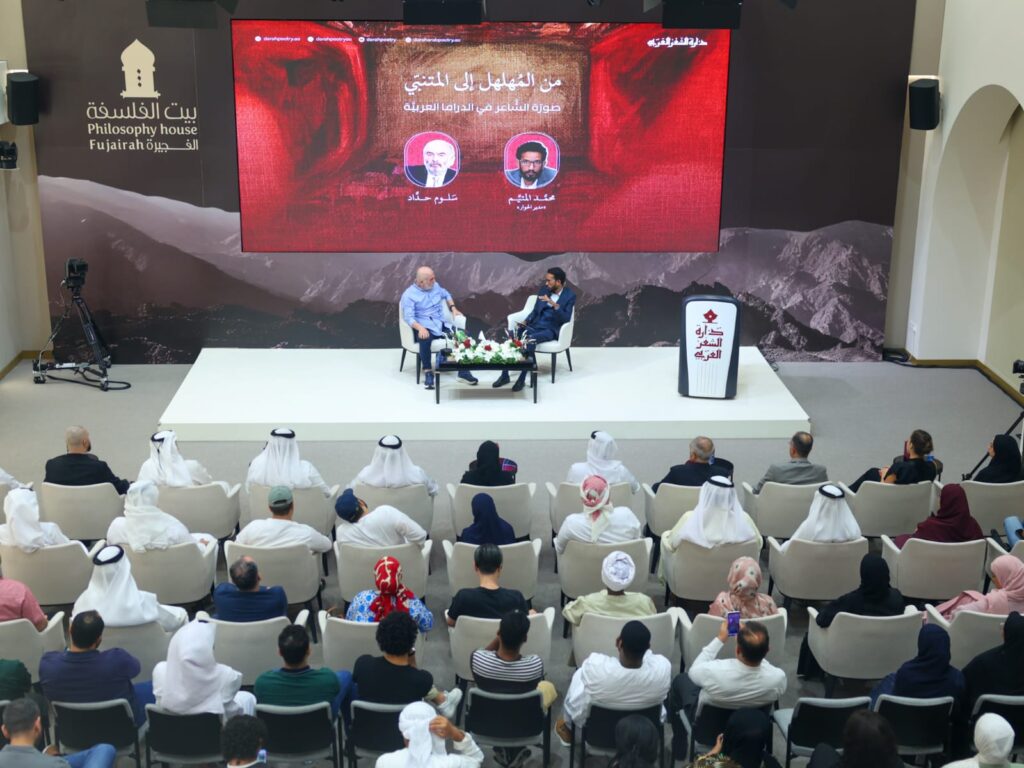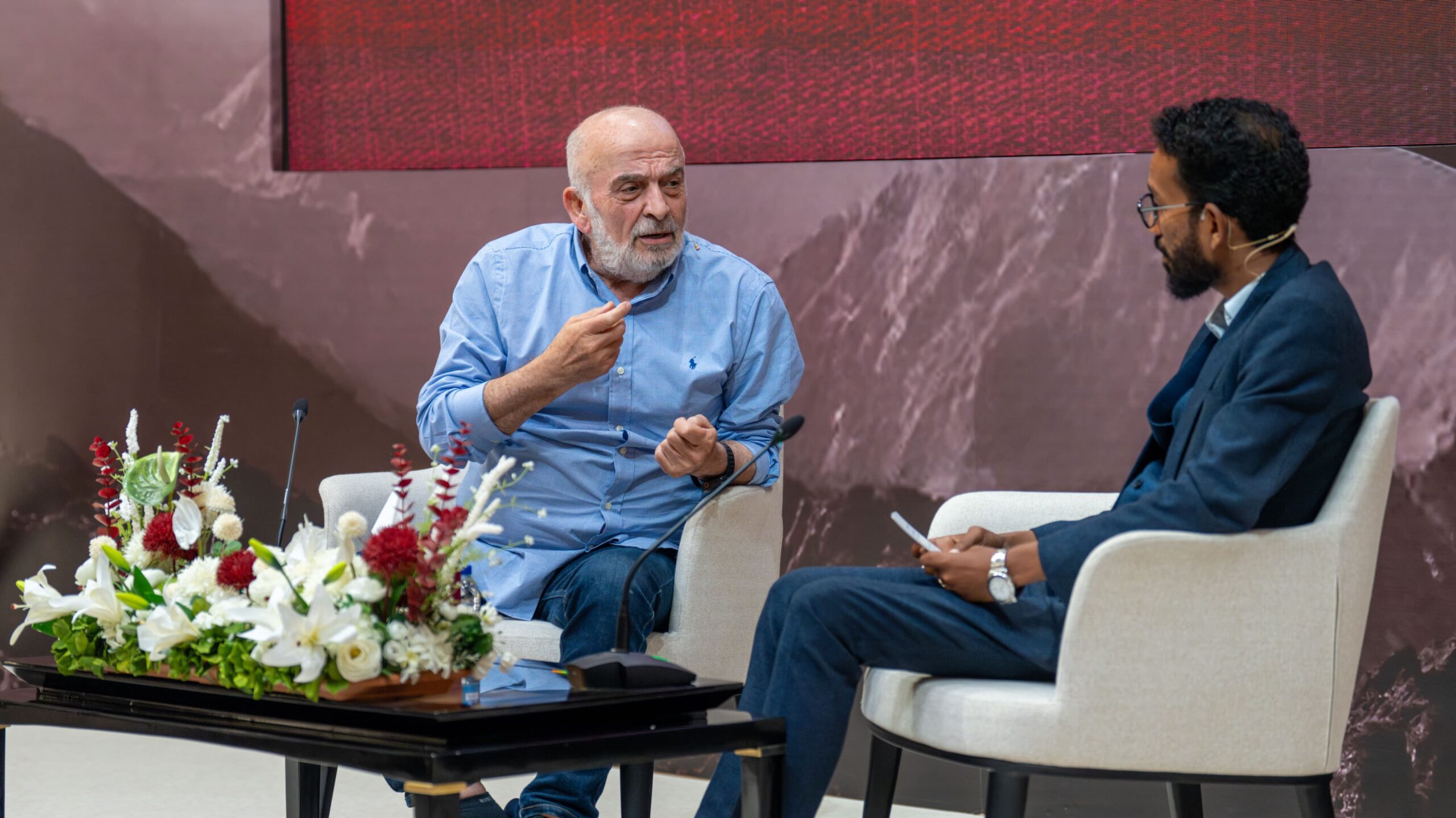
I made it. «Arab Hair House» On Saturday, 9 August, a symposium entitled " Picture of the poet in the Arab Drama " hosted by the Archbishop of Slom Hadad, which was enriched in several historic series by the characters of some of the most prominent Arab poets, including Mahal bin Rabah, Abu al-Talib al-Tinbi and Zar Qabani.
The colloquium was moderated by the poet Muhammad al-Mitem, who had developed around the various roles of Slom Haddah al-Sha ' ariah, revealing the great artist ' s relationship with the dramatic roles he had played during his busy career, namely, with the poet Nazar Kabbani, who had performed with great love and affection, asking about his favourite poet and who wished to play his role, his conclusive answer:
Salom Haddat addressed the poet ' s value in Arab culture and the centrality of his inherent role in the instigation of the Arab community by a tribe, State or nation, as well as the efforts of the artist to accommodate the historical and artistic context of the poet who served his role.
We also note the value of having a Sunrise at the level of poet, such as the late Syrian poet, with an act of aggression, where the dramatic text of his spirit and consciousness, as a poet as the conscience of the nation, is given.
To celebrate the prophet, as our most prominent poetic voice in the last 1,000 years, artist Slom Haddad read a piece of the poem "a rose from the blood of the prophet" of the late great poet Abdullah Al-Burdoni.
It should be noted that artist Slom Haddad is currently preparing for the performance of the Tawi character, who is also a poet, a knight and a leader of an Arab tribe with a prominent place in Arab history.
At the conclusion of the symposium, Ms. Salim Al-Mazrawi, Director of the Arab Hair Dara ' a, was presented to the Grand Arab Arts, who was thanked to His Highness Sheikh Mohammed Bin Hamad al-Sharqiyah, Crown Prince of El Fajira, for his culturally motivated care in the Principality and for his great support for this vital sector in the development of nations and communities.