Fsdf 1200x500

Listening to enablers in the cut-off. | Muzah Abdullah Al-Abduli

Sads

Muzah Abdullah Al-Abduli

Cash from the Emirates.

This article aspires to stand on the sound of a deaf poet, where the Syrian poet lost. «Riyad Al-Salih Al-Husse» (1954-1982) My hearing and speech guardian, who is 13 years old, following a sudden illness likely to be a kidney failure.[1]The poet continued to see his illness from the crowd, resting in his cold shadow, blunt in front of the world, saying about him. «Egyptian vow.»It was a sport that wanted to be true, it didn't lack anything like everyone, full or semi-financial as everyone, and capable of everything, and more than everything.[2]The poet kept the memory of the sound or its ghosts, and he kept the songs back as the impossible tone.

In front of this vocal and linguistic treasury, any reader in the poet ' s experience is shown: the simplicity of words, images, telescopes and the limits of vocabulary. His poems are based on his ceremonial vocabulary, as he speaks in his revolutions and liberties, as he cries for the abandonment of love, the brutality of unity, or the glimony of the glory.[3]This is evidenced by the experience of the good, but its compound is an advanced and afflicted by the Arab poetry experiment, a mine with its linguistic limits reflecting its fenced poetic world, while there are no effects on the formation of its poem by the forced silence of the world itself. «David Lobron.» The sealed gap is: "The Meaning Clan is in its larger apartment, a voice clan, and an openness to the euphoria of everyday life, deafness is a possible dimension of reality."[4]

The voice crosses the bridges of communication with self, the world and memory, and the song is centred on poems as the missing substance after deaf wounds, and the envy of beautiful voices and their parties, so that songs come on poems, creating the bridge to the world yesterday, or the distant dream of tomorrow, showing as hope, treatment and peace for the miserable present, saying:

"I was tearing love in hearts
As they distribute lead.
I was scattering songs on mountain roads.
As they scatter the mines.[5]

The songs are the vocabulary of love and good times in front of the misery and the warmth of wars. It is clear that the songs in the poetry are wars and their weapons, and these two are sure to say to the poet Nzieh Abu Afash: "You are so close as wars and far away as songs."[6]To create these vocal vocabulary, such as looting, extermination, wars, tenderness, growth and dynamism ( songs), the singularity of songs has been shown in poems with the meanings of light and hope, and in all its friends it wrestles cruelty and death:
"Are you going to the grass?
Or are you going to war?
We were walking and punctured.
And we were walking around a thousand diapers.
Hands in hand and sing.
Hand to hand and death."[7]

The end scene of going to death is singing; it reflects a picture of resistant images of the sound-gun, defying at this ideal end two forces: the power of death and the power of singing, and the continued alienation of the poet holding the song weapon, the vocal weapon whose ammunition does not possess, and it continues to contemplate such deprivation through its open-minded character:

"Don't I look like a ground rule to launch songs on humans, so why are you looking at me with a spell?"[8]

If we assume that the poet's song is his poem, it's a poem of hope and love that lights up, to be the voice he can't say, but it reaches all mankind, and in this perfect perception of the bright effect of songs; it appears in many scenes as the sedative and therapist, like, "Who will sing me a song in the evening to grow a rock?"[9]Children ' s Judaisms, or the sperm to that vocal phase, are the most likely of the incendiary to take down his inflammation, but they are songs that do not arrive and are impossible to achieve.

"Don't open your hand. Don't open your hand.
All the songs of the world will be released from them.
Don't hang your hand, don't hang your hand.
All the songs of the world will come to them."[10]

As long as the hand is tied to giving and receiving, and in both cases she receives and divorces the songs, they contain them. At the same time, the songs are given by the diva, all these imposses that emanate from the river, its recipe, the river, the river, the river, the river, the river, the river and its flames, to be naturally rewarded.
"Mom's a lot to give.
And behind a lot of cemeteries.
"in front of the river, the smell of morning and songs."[11]
But these songs that have become a symbol of beauty solve the cruelty of obscureness:
I opened the windows
No one in.
No river, no butterfly, no lost song."[12]

Or say:
"We're beginning to know what time means.
When we get home alone,
I've got hearts and fingers.
We're beginning to know what the sleeping rocks mean at sea.
Sleeping sun in the sky.
"and sleeping songs in the cemetery."[13]
In the face of the meaning of the absence of songs, the value of their presence is evident. The sun sleep means the absence of light, the sleeping of songs means the absence of human beings and security, and despite the simplicity of distortions; however, the texts give great meanings in describing the world ' s existential and cognitive state, with songs becoming a tangible material of existence.

       At the big silence gap, and the poet's loss of the song tone, his poems come with a twist that generates a musical rhythm, saying:
Travel, travel, travel.
It's what I want.
Freedom, freedom, freedom.
It's what I ask."[14]

       Repeat is loaded with its delirious and sound agendas. It demands, and it blasphemes and erupts in different contexts, saying, "between your hands, world / turn around, like, luckily."[15] And he said, "Dance and dance and dance until music gets tired."[16] And repetition comes as a childhood urgency:[17] Or like saying, "Come, kiss me, kiss me, kiss me, kiss me."[18]To create the poet with all these emotional repetitions, his song that he dreams of hearing.

       If we re-prospect the songs in the experiment, we will find them as the representative of the impossible dream, whose severity of impossibility holds the same, and their hopes for peace, love, healing and people, as songs or poems - become the wickedest of the wrists.

[1] Inana Al-Saleh, Riyad al-Salih Al-Hussein and Shari ' ad al-Qa ' idah, Arab magazine, Kuwait, A. 699: https://alarabi.nccal.gov.kw/Home/Article/18971

[2] Riyadh Al-Salih Al-Hussein, full works (1954-1982), Middle Publications House, Italy, 2, 2021m, p. 8 (Principal for Action by the Egyptian Monath).

[3] Perspective: Sam ' s and hearing impairment, Jamal al-Hib, Al-Sharq, Jordan, 1, 2021m, p. 81

[4] David Lopurtun, Anthropology: The World with Sociological Extents, Translation: Fred Al-Zahei, Book Cultural Centre, Casablanca, Morocco, T, 2020m, p. 180

[5] Al Hussein, full work, p. 87

[6] Full work, p. 125

[7] Full work, p. 83

[8] Full work, p. 106

[9] Full work, p. 144

[10] Full work, p. 244

[11] Full work, p. 205

[12] Full work, p. 224

[13] Full work, p. 165

[14] Full work, p. 173

[15] Full work, p. 176

[16] Full work, p. 173

[17] Full work, p. 32

[18] Full work, p. 175
1200x500

Travelers. | Dr. Murad Kadiri

ZX

Dr. Murad Kadiri

poet and researcher, head of poetry in Morocco.

For an untimely period, the Arab cultural and literary center has seen a remarkable movement of vision, even we can call it the afternoon, because it didn't hit on one, but it's traced several of them. Individuals, who considered them to be normal and necessary behaviour to build their moral status and to arrange their relationship with their own and others, thus the phenomenon of alienation and individual and collective migration towards novelism.

You disagreed about this phenomenon, but most of it moved towards devotion, where it was considered evidence and testimony that emanated themselves with lack of certainty in poetry.Their trustworthy loss of necessity and found it.

What's the reason for this migration? Is it tightening up the poetry at the first house, the house that allowed Arabs to wear the hair nation, the house where they arranged the poems, to be angry and silent?

How the answer is, we're in front of a phenomena we can't deny or against, reflecting a hierarchy that some fantasize about between poetry and novels, like between the hairy tits, loyal to their faces towards the narrative and their physical obsession.

This class of poets contemplates how he can employ his poetic gains in a novelist and wise manner, whether by devoting his own automobile, or by recovering his long-distance journalism.

On the other hand, there's a couple of hairy hairs that go out of the corner, because it stops being a desert, and it doesn't seem like it.

In that sense, it's a phenomenon.The barbecue travels.There's a great deal of popularity, and there's a great deal of popularity in our Arab region.

It seems to me that the phenomenon of Travellers must be seen in the backgrounds and intentions that move their owners towards the subvention of the adventure, and on the one hand, there's a lot of hard-to-peaking power from the poet to the flags, long-distance, short-distance, hard-won rules. All that motivated these poets to move from the dull of poetry to scripture remains a healthy and ruthless situation, because they have achieved interplay between literary races, especially the literary genders, the most intelligent writers: poets and novels, which can be monitored through poetry and poetry.

* poet and researcher.

Head of Hair in Morocco.

V 1200x500

The history of ego hair in the Emirates | Ibrahim al-Hashimi

Picture2

Dr. Ibrahim Al-Hashimi

Writer and poet of the United Arab Emirates

The majority of researchers and scholars of the history of poetry in the United Arab Emirates know that the oldest of our popular poetry is majedi-ben Zahir, for the popular poet who has received numerous studies and research on his history, his fields, his arts and his types. So far, the Arabic poetry is still unclear, and studies or research on this aspect do not heal the gloomy and show how far the Arabic and Arabic Library are concerned.

Dr. Ahmed Amin Al-Ahmah did not mention anything that could be relied upon in his book "The Popular Hair in the United Arab Emirates grew up and evolved."

A few years before the establishment of the State, and when we're looking for some articles or short studies about the product of some poetry, especially those of the al-Qa`idah group, we can't deny the role of a group of researchers who've enriched the scene with the research, articles and studies they wrote, such as Abdelgafar Hussein and the Al-Bador, who have made a remarkable effort to produce the U.

Studies that have produced a disguised effort but are not enough to give a real and real image of poetry in the Emirates, whether in terms of time, poetic schools or poetry technicians, since most of them are in a public folk that has not reached the heart, flare and poetic reality of the Arab-language studies in the Emirates.

Apologise 1,200x500.

A literary session at the Arab Hair Department in El-Fagher.

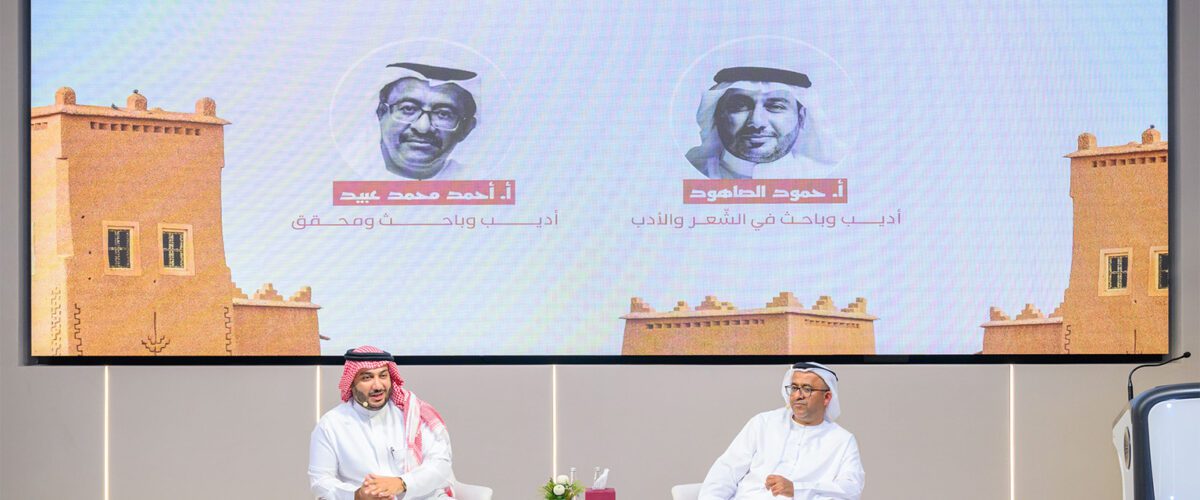
On 19 July, Walmah, the Arab Hair House organized a poetic literary session entitled " News and Notices " around Arab poets in the Jazz and east of the Arab island.

The meeting was hosted by the researcher in Al-Audab and Ha ' ah Hamoud of the Kingdom of Saudi Arabia, Al-Adib and the United Arab Emirates researcher Ahmed Mohamed Abed, who addressed stories and news of Arab poets from various regions of the Arab island and across the various ages and highlighted their stories and events.

The researchers spoke of the association of poetry poems with the place, environmental elements and the various social phenomena of the Arab human being and their influence on the vocabulary and poetic images contained in their poems.

The session was attended by a collection of literature, poets, youth and interested persons of different ages in State administrations.

IMG 8807 scaled 1 e1720446865644 1200x500

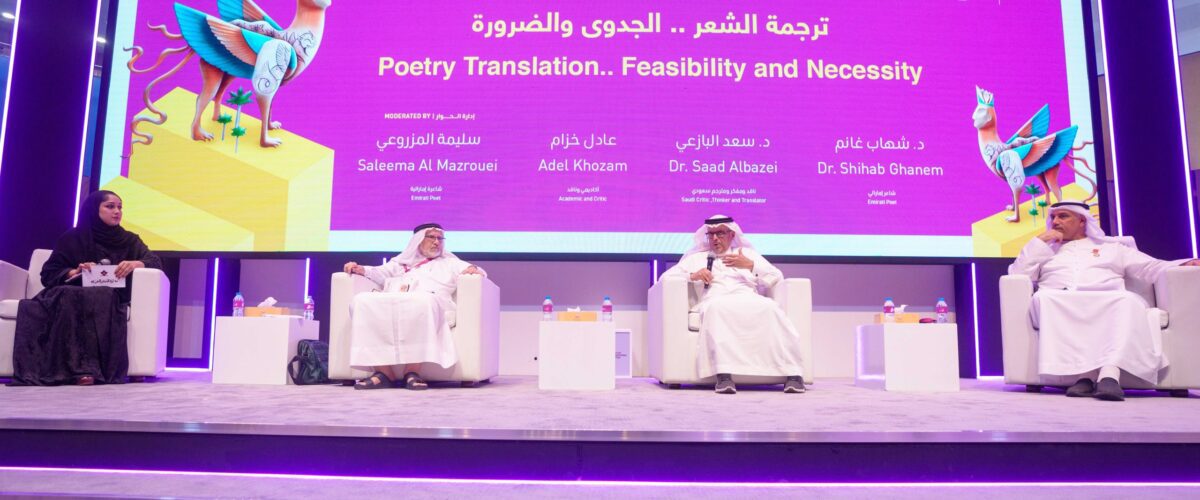
The Arab Hair House discusses the feasibility and necessity of translating poetry at the Abu Dhabi International Exhibit 2024.

The meeting was attended by Dr. Sa ' ad al-Bazzi, Dr. Shahab Ghanem, Sha ' ar Adel Khazm, and was moderated by the Director of the Arab Ha ' ah Ha ' ah in Al-Fagira.

The interactive session addressed the topic of poetry translation by introducing a number of axes, the essence of which was the possibility of translating hair and impossibility, relevance and necessity, as well as changes in the translation of historical, geographical and humanitarian poetry and its cultural necessity.

Participants spoke of the importance of a translator being a poet that would better understand the cultural and historical pattern and all its implications and features in order to be able to create a poetic text with the characteristics of its original text or separate to be self-existing.

The controversy about translating the spirit of the poem and its expressions in exchange for translation by focusing on the techniques and tools of the building was also addressed in an affirmation that the translator ' s poetry text should be distinguished and disseminated, and remained dependent on its success in expressing the idea of the poem and reflecting its first spirit.

Speakers joined the fact that translating poetry is a cultural necessity, cross bridges through the cultural, civil and human meanings of the world ' s peoples as a common human language, emphasizing the importance of indulging in the identity of the other, understanding the cultural contexts of poems, patterns and symbols, and promoting their analysis and creativity.

The Arab Hair Darh al-Fajih participates in the cultural programme of the Abu Dhabi International Book Fair this year, following its official launch early last February with the guidance of His Highness Sheikh Mohammed Bin Hamad al-Sharqi, Lei Al Fajira, and her inaugural nation last week, with a view to renewing and preserving Arab poetry through future initiatives and projects, and providing a new direction that brings poets and interested people to the prospects of Arab poetry.


Jbg039kg1k80y37pn scaled e1720446681300 1200x500

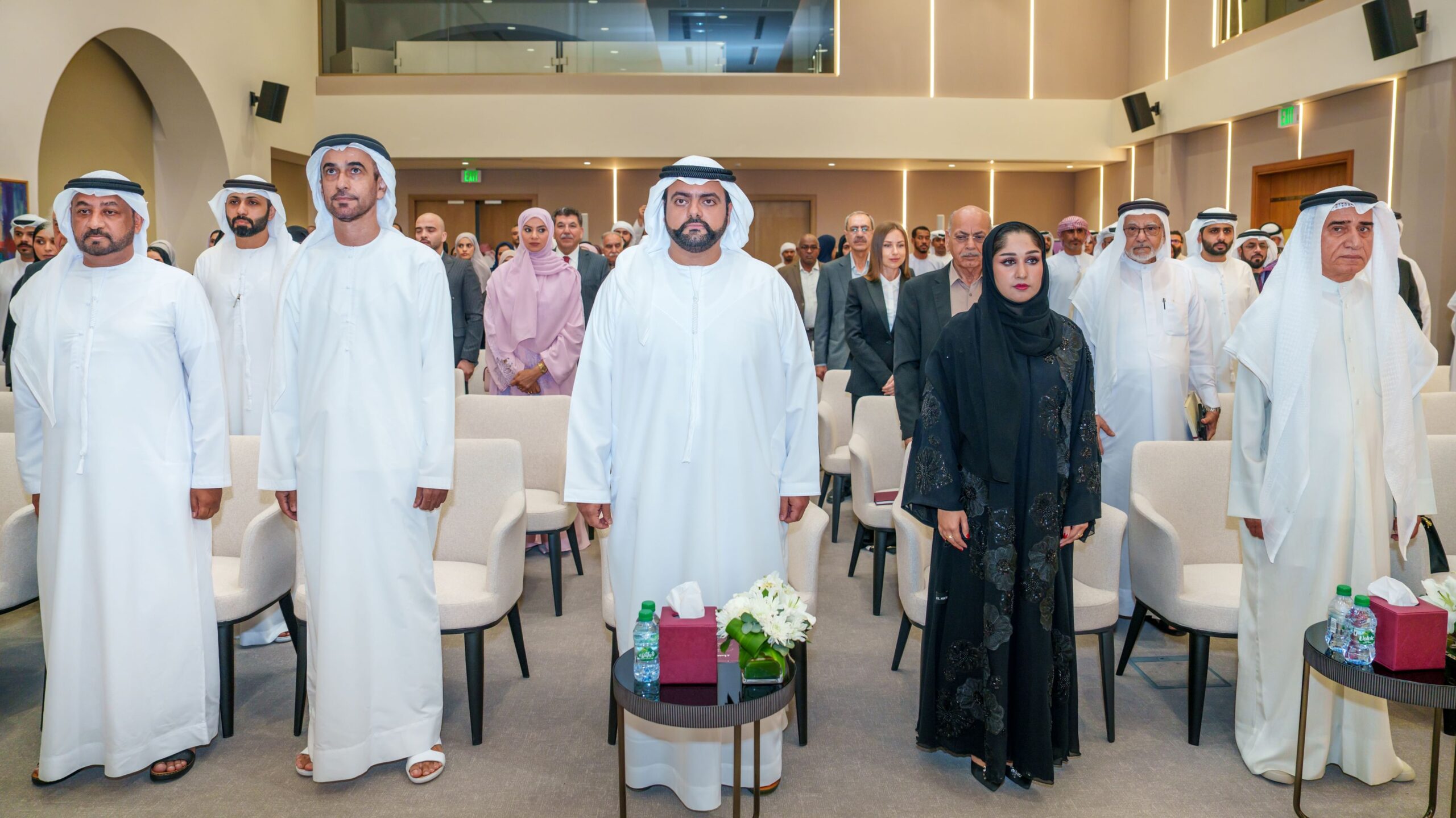
The Crown Prince is witnessing the opening evening of the Arab Hair.

On 26 April/Wam, His Highness Sheikh Mohammed Bin Hamad bin Mohammed al-Sharqiyah and Lei al-Fagira, confirmed the status of poetry in the history of Arab literature, and his great role in embodying human life on the Arab peninsula and monitoring its transformations through the ages.

This came during the presence of His Highness yesterday, the opening poetic evening of the Arab Hair in El Fajira, in the presence of His Excellency Dr. Sultan al-Amimi, President of the Union of Books and Ethics of the United Arab Emirates.

His Highness noted the support and guidance of His Highness Sheikh Hamad bin Mohammed Al-Sharqi, a member of the Supreme Council of the Governor of El Fajira, for cultural projects that upgrade the literature and culture sector of the Principality, strengthen the efforts of the United Arab Emirates in cultural and creative work, provide talent for contributing to nation-building and develop the foundations of its civilization development at all levels.

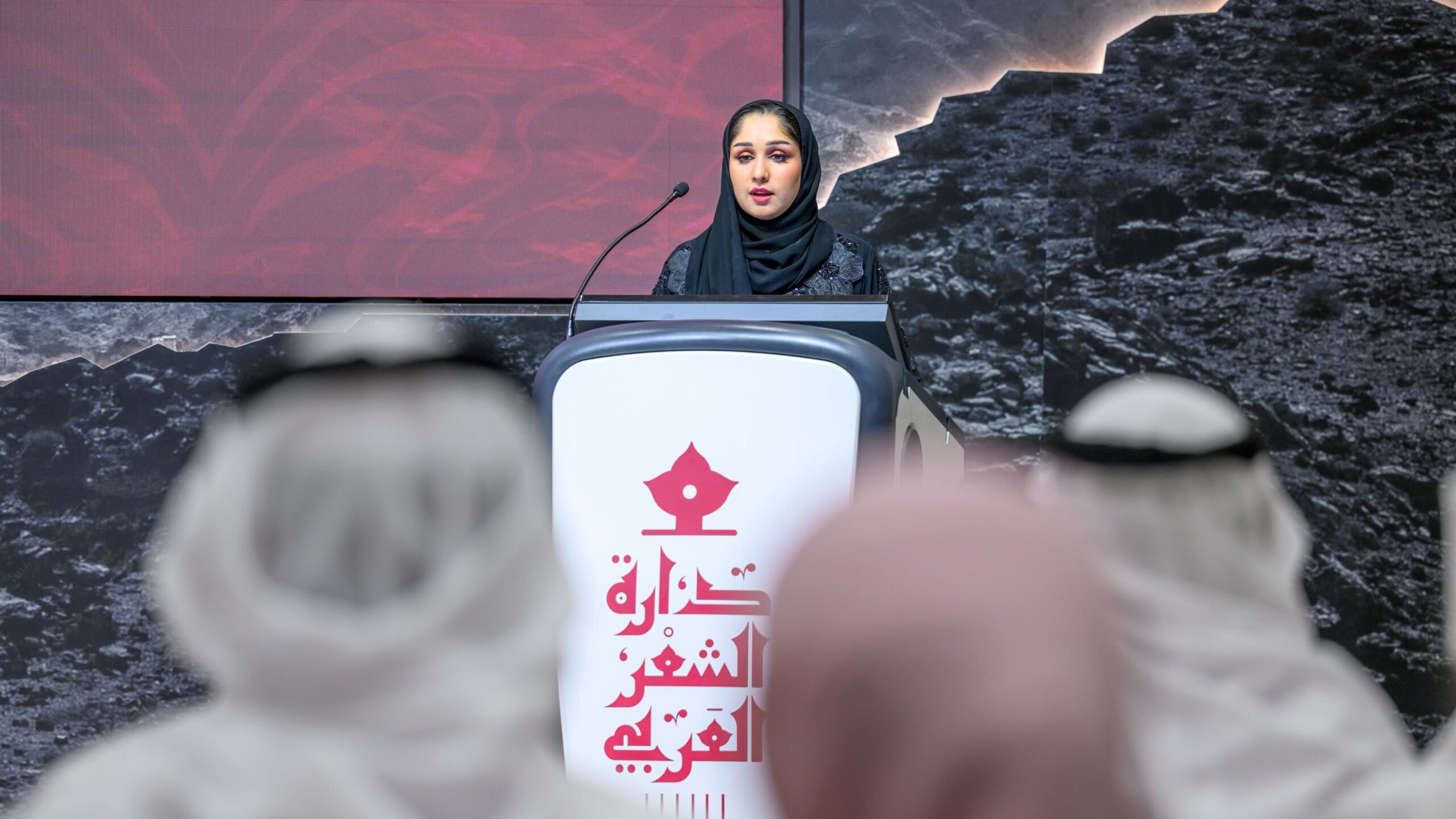
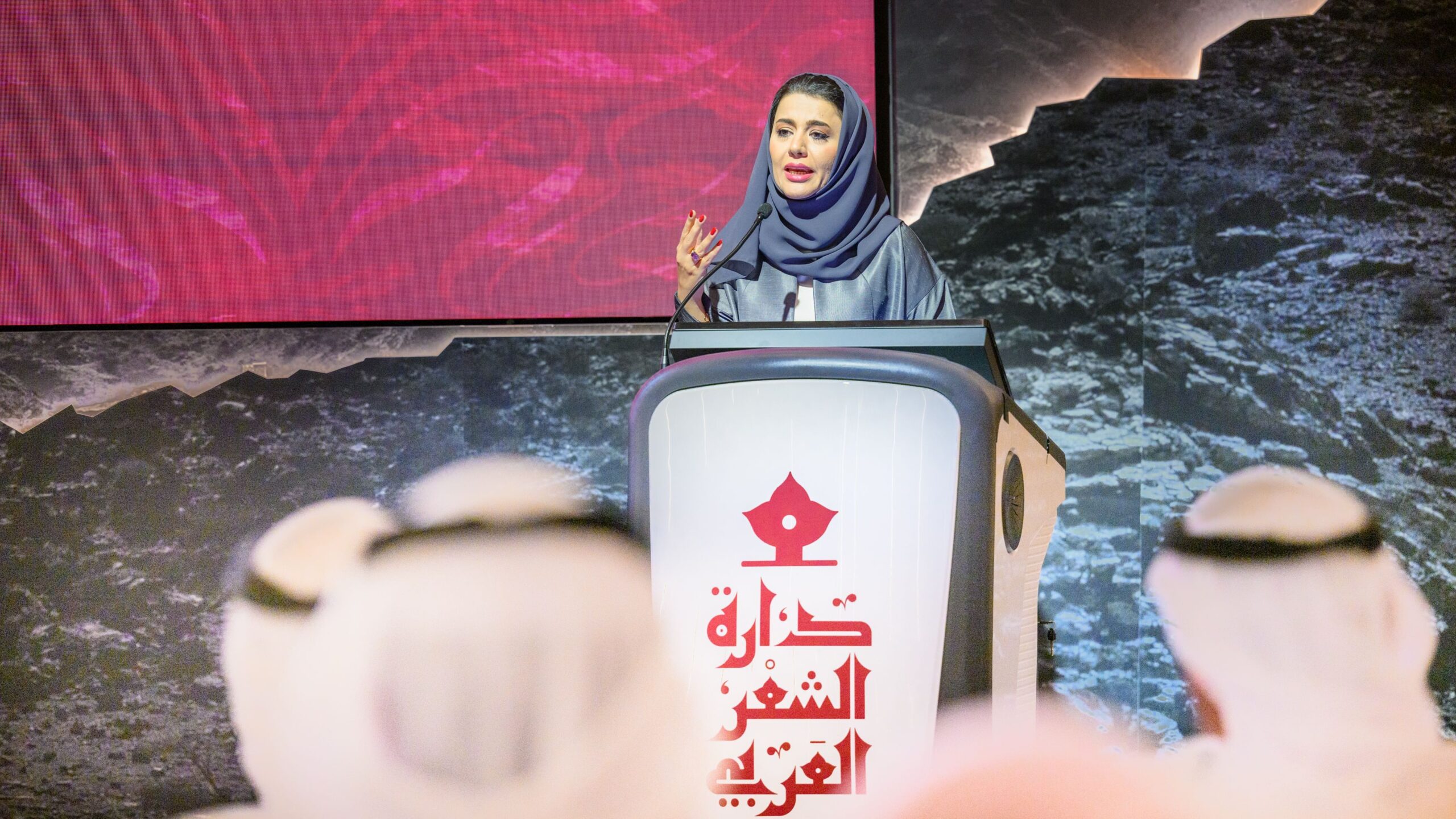
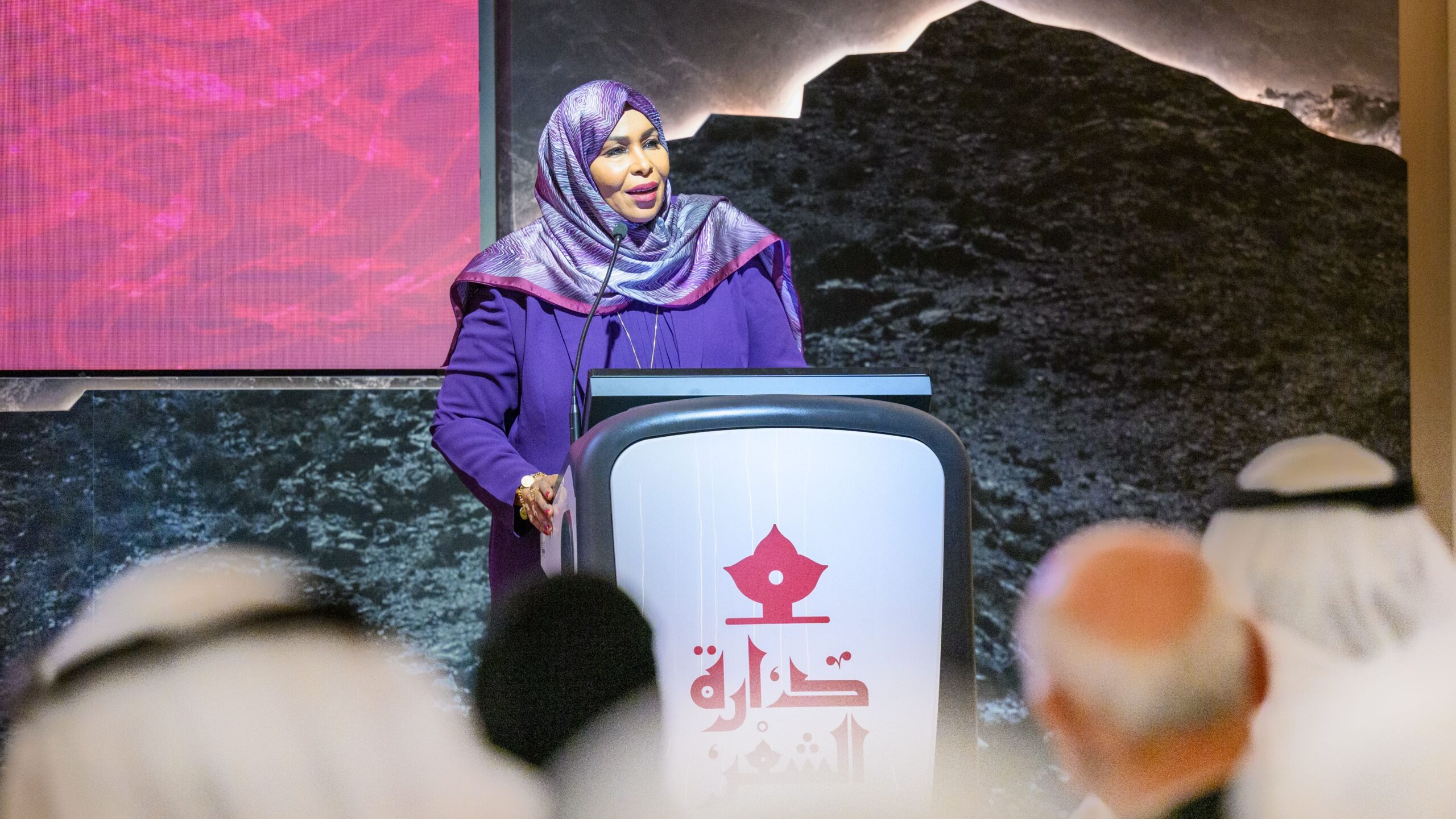
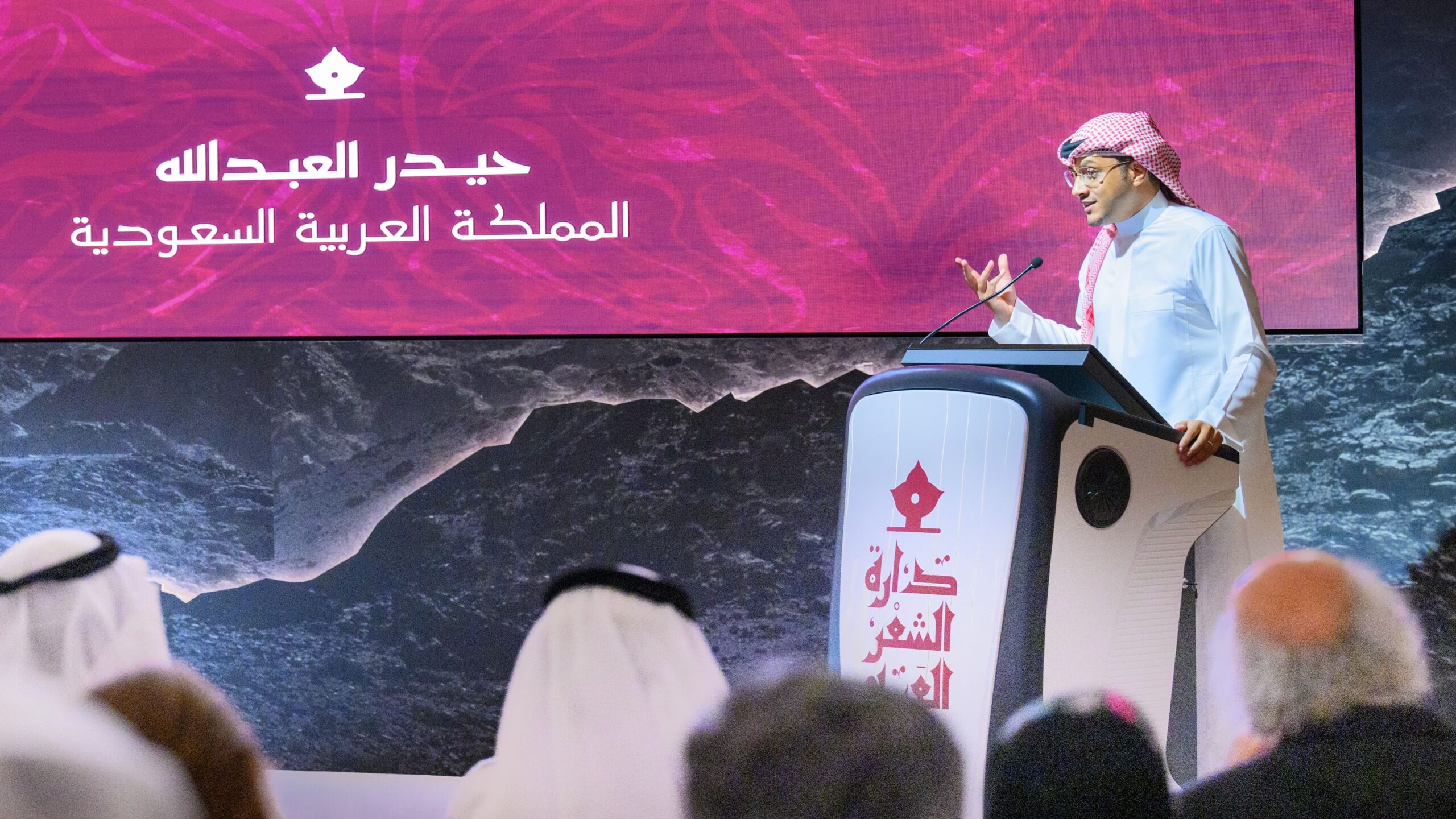
The first inaugural evening programme of the Arab Hair House included a brief film on the Dahara, an opening speech by Solim al-Mazra ' ari ' a, a poet with the participation of the Ra ' d El Hadj from the Republic of the Sudan, the poet Hyder Al-Abdullah of Saudi Arabia, and the poet Alam Al-Sawi of the Emirates.

His Highness drew attention to the importance of highlighting various poetry schools in the history of Arab literature, paying attention to their introduction and observance in society, and supporting talents in strengthening the creative industries sector and contributing to its support and development.

The honour of His Highness and Crown Prince, the three poets participating in the evening, praised their performance and level of participation in the evening.

The opening evening comes with the revelation of the activities of the Arab Hair House in El Fajira, which was launched under the guidance of His Highness and Crown Prince early last February, with the aim of reviving the status of Arab poetry as a religion of Arabs, highlighting all poetry in the history of poetry through the ages, and celebrating the talents and poets that target the various groups of the circuit.

Yesterday, H.E. Dr. Ahmed Hamdan Al-Zaudi, Director of the Office of Samu Wali Al-Fagira, Salah Gabash, Head of the Cultural and Information Office of the High Council for Family Affairs in Sharjah, and the collection of poets and intellectuals.